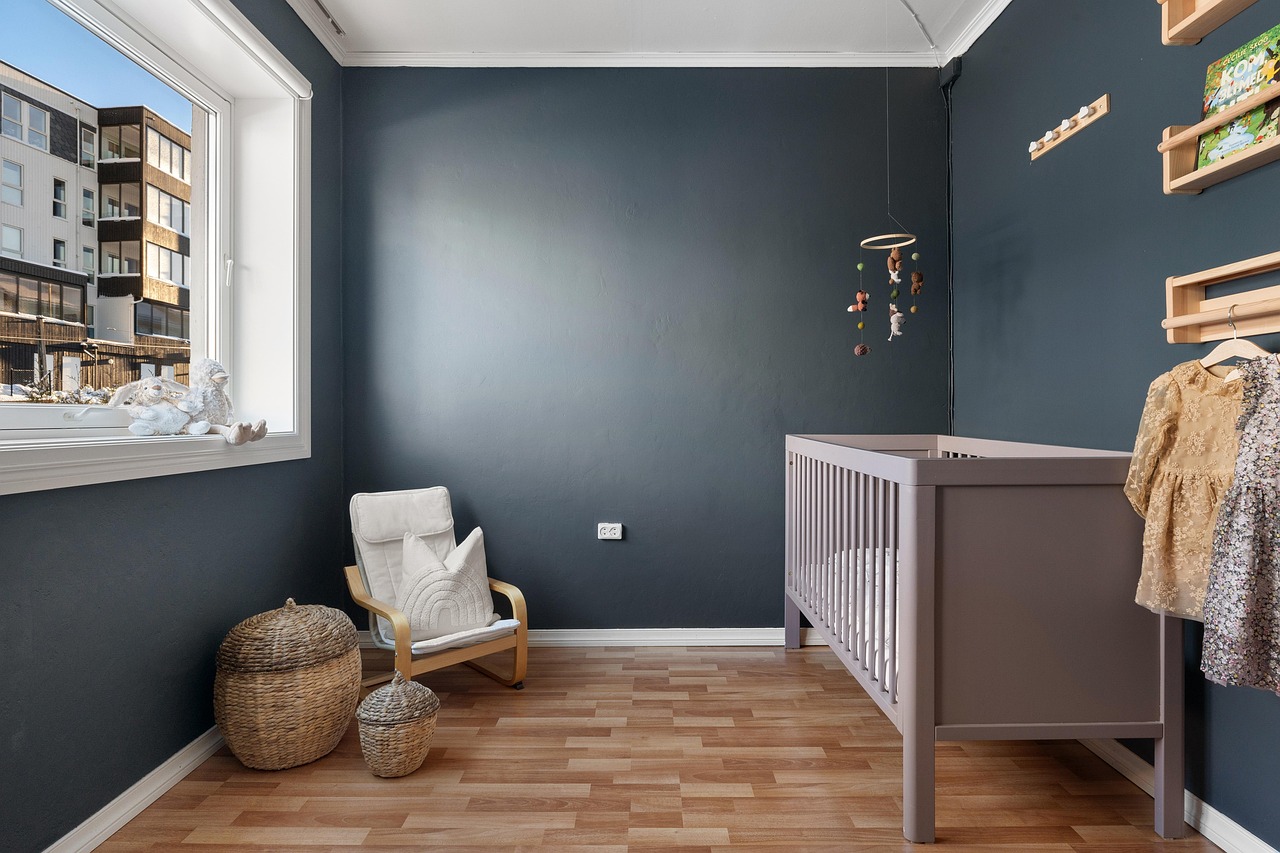
National housing and design data now point to a clear break from the all-white, all-neutral interiors that dominated much of the last decade. The specific shift getting the most measurable traction is color drenching, a technique that covers walls, trim and often ceilings in the same saturated hue, and Zillow says it is now appearing far more often in for-sale listings across the U.S.
Zillow puts a number on a trend that had looked too bold for mainstream buyers

Zillow formally identified color drenching as one of its leading 2026 home trends in a report released October 15, 2025, and the company said mentions of the design choice in Zillow listings were up 149% year over year. The company described the look as part of a broader move toward “color-drenched, whimsical and resilient” homes, based on language drawn from millions of for-sale listings on its platform. Amanda Pendleton, Zillow’s home trends expert, said in the company’s release that agents “have a front-row seat to what today’s buyers want most,” and that changes in listing descriptions can signal what is gaining traction in real time.
That figure matters because it gives a measurable scale to a trend that had circulated for years mainly in designer homes and social media posts. Instead of limiting color to a single accent wall, color drenching typically extends one shade across multiple surfaces to create a more immersive room. Zillow’s reporting tied that shift directly to buyer attention, saying consumers are moving away from the uniform minimalist palette that had defined many listings in prior years.
Zillow’s broader 2026 trend package placed color drenching alongside other highly personalized features, including artisan finishes, vintage details and rooms designed for specific routines such as reading nooks and spa-style bathrooms. In a separate November 4, 2025 article explaining the same findings, Zillow said buyers were increasingly drawn to “mood-driven spaces” and to features that make homes feel more individual rather than generic. That framing positions color drenching not as a niche design stunt, but as part of a wider recalibration in how sellers present homes and how buyers evaluate them.
The trend is also being reinforced by design media beyond real estate platforms. Elle Decor reported in late 2025 that bold, once-forgotten details were expected to be widespread in 2026, while House Beautiful identified the “invisible kitchen” and more custom, furniture-like detailing as signs that homeowners are prioritizing cohesive, highly styled spaces. Together, those reports point to the same underlying change: rooms are increasingly being treated as complete visual environments rather than neutral backdrops.
The shift is national, but homeowners still do not have a state-by-state map of where it is strongest

What is confirmed so far is national, not local. Zillow’s trend report is based on U.S. for-sale listings and does not provide a public state-by-state breakout showing where color drenching is most concentrated, and the company has not released a comprehensive list of metropolitan areas or states leading the increase. That means readers can say with confidence that the trend is spreading across the American housing market, but not that one specific state has definitively emerged as the center of it.
Even without that granular map, multiple national trend trackers show the same movement toward more personalized interiors. Pinterest said in its Spring Trend Report 2026 that “home isn’t about perfection” and described a season of micro-makeovers in which paint and small-room upgrades carry more weight. In its 2026 forecast released in December 2025, Pinterest also said trend growth is accelerating and that consumers are increasingly focused on comfort, authenticity and escapism, themes that align with enveloping, room-wide color strategies.
Houzz data points in a related direction, though through searches rather than listings. Its 2026 U.S. Emerging Summer Trends Report, published last month, said U.S.-based searches reflected growing interest in warm, earthy color stories and layered spaces that feel more transportive and personal. Houzz framed those findings as evidence that homeowners want rooms that carry a stronger point of view, rather than generic finishes intended to offend no one.
For local readers, that means the practical impact is visible less in a formal state ranking and more in the kinds of homes now being marketed and renovated. Sellers, agents and designers are responding to a buyer environment that appears more open to distinctive interiors than it was a few years ago. What remains unknown is whether the strongest adoption is concentrated in high-cost urban markets, design-heavy coastal metros, or more affordable Sun Belt areas, because the publicly released data does not yet break that out.
The trend is being driven by buyer fatigue with minimalism and a broader push toward personality

The clearest explanation for color drenching’s rise is that buyers and homeowners appear tired of sameness. Zillow said directly that consumers are moving beyond the “same neutral palette,” “same white kitchens,” and “same minimalist aesthetic” that had become common in listing photography and renovation advice. The company’s analysis suggests that immersive color is gaining ground because it helps a home feel distinct, expressive and emotionally specific at a moment when generic design is losing some of its appeal.
Pinterest’s 2026 forecasting supports that explanation from a different angle. The company said consumers are seeking comfort, authenticity and optimism, and its spring report added that personalization is becoming central to how people update their homes. Those signals matter because Pinterest data tracks future intent and search behavior, while Zillow tracks how homes are actually being described for sale. When both platforms point toward stronger self-expression, the overlap strengthens the case that this is not just a passing visual fad.
Design publications have also connected the shift to a broader rethinking of how rooms function. House Beautiful’s reporting on the invisible kitchen trend described a desire for spaces that read more like architecture and furniture than utilitarian work zones. Elle Decor similarly reported that curves and other once-overlooked details are now showing up across furniture, millwork and even kitchen islands. In that context, color drenching fits a larger design logic: homeowners want rooms that feel intentional and complete, with fewer visual interruptions.
For buyers and residents, the immediate takeaway is practical rather than speculative. Expect to see more listings, renovation projects and inspiration imagery that use a single strong color across multiple surfaces instead of relying on white walls and isolated accents. Zillow’s data shows that this presentation is already entering the sales market at scale, and the company’s 2026 trends report suggests bold, personalized interiors are becoming a standard part of how homes are marketed.