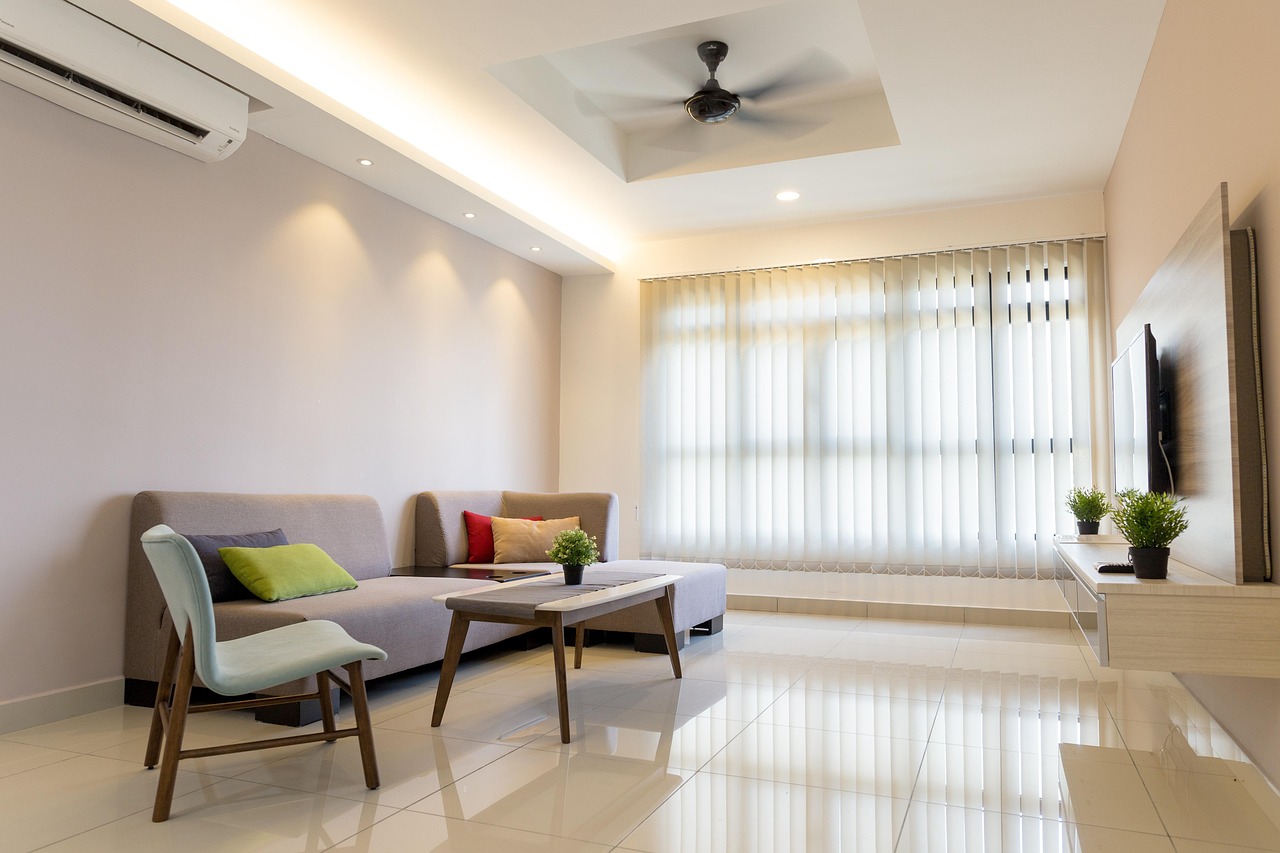
U.S. renters are making housing decisions in an environment defined by affordability pressure, smaller living spaces and a rental market that increasingly rewards flexibility. In that context, more renters are choosing to live with fewer pieces of furniture, a shift supported by recent survey data from Rently, Zillow, Redfin, CORT and StorageCafe.
Renters are cutting back on furniture, and the numbers now show how broad the shift has become

A clear data point arrived on March 4, 2025, when leasing technology company Rently released its 2025 Apartment Design and Decor Trends Report. The company said its survey of 500 U.S. adult renters found that 72% were embracing minimalism, favoring clean lines, warm neutrals and intentional design choices, while 45% said they planned to refresh their homes simply by rearranging furniture rather than buying more. Those figures do not measure furniture counts room by room, but they do document a broad renter preference for doing more with less.
The same report found that 46% of renters were focusing their design updates on living rooms and 44% on bedrooms, suggesting the emphasis is on making a smaller number of heavily used spaces work better. Rently also reported that renters are leaning toward renter-friendly changes, including plants and small DIY projects, instead of renovation-heavy upgrades that are usually out of reach in leased homes. Taken together, the report points to a practical version of minimalism: fewer large purchases, more intentional placement, and more reliance on flexible pieces that can adapt to changing needs.
Industry reporting outside the decor category points in the same direction. In a 2023 survey released by CORT, the furniture rental company said 77% of people planning to move in the next 12 months would consider a furnished apartment, up from 37% in 2022 and 25% in 2021. CORT’s survey covered 5,000 respondents, and the company said the increase reflected demand for convenience, mobility and lower hassle around purchasing, moving and maintaining furniture. While furnished apartments are not the same as fully minimalist homes, interest at that scale shows many renters are increasingly comfortable owning or moving fewer large items themselves.
This is also happening while the broader furniture business has been uneven. Furniture Today reported in 2026 that U.S. residential furniture orders in 2025 were essentially flat year over year, with shipments down modestly, according to Smith Leonard’s Furniture Insights data. That does not prove renters alone are buying less, but it provides a wider market backdrop for a consumer segment that is becoming more selective about what it brings into the home.
The shift is national, but its effects are especially visible in small apartments and high-cost rental markets

The move toward fewer furniture pieces is not limited to one state, and no national source has published a comprehensive state-by-state list of where minimalist furnishing is rising fastest. What is confirmed is that renters across the U.S. are operating under conditions that make smaller, lighter setups more practical: many are staying in apartments, many are still considering future moves, and many are living in spaces where square footage is limited.
Zillow’s 2024 Consumer Housing Trends Report found that apartments remain the dominant rental format and that 69% of renters said they were considering moving within the next three years or were unsure when they might move. Zillow also found that the typical recent renter reported taking only one in-person tour, and that 43% signed their lease electronically in 2024, up from 40% in 2023. Those figures reflect a rental experience that is increasingly digital and mobile, which helps explain why renters may prefer furniture that is easier to move, store, rent or live without.
Storage data also show how renters are adapting when their apartments cannot comfortably hold everything. StorageCafe reported in April 2025 that 33% of surveyed Americans were currently renting a self-storage unit, with renters slightly more likely than homeowners to do so. The company said shrinking apartment sizes, especially in dense urban areas, were making storage a practical option, and it found that furniture was the most commonly stored item, with 27% of respondents saying they kept furniture in their unit. That matters because it suggests many households are not just buying less furniture outright; they are also rotating, parking or deferring the use of pieces that do not fit daily life in their current apartment.
The trend looks different depending on the local market. In high-cost metros where moving is expensive, renters may hold onto fewer core pieces for longer and avoid overfurnishing because replacing or transporting large items is costly. In faster-churn markets, lighter setups can make relocation easier. What is not yet known is exactly how many renters in any given state have reduced their total number of furniture items, because the publicly available surveys focus more on design choices, mobility, storage behavior and housing preferences than on a strict item count.
For residents, the practical effect is visible in listings and living patterns. Furnished and semi-furnished units, multipurpose tables, smaller-scale seating and flexible room layouts all align with a renter base trying to preserve space and reduce moving friction. Zillow has said furnished apartments can appeal to renters because furnishing a space from scratch can be expensive, and semi-furnished options often cover the biggest pieces without requiring households to own everything themselves.
Affordability, mobility and smaller spaces are driving the change, not a single aesthetic fad

The reasons behind the shift are mostly economic and structural, according to the housing and rental data now available. Redfin reported in 2024 that 25.6% of renters moved within 12 months and 40.8% moved within one to four years, even as a growing share stayed put longer because buying a home remained out of reach. Redfin Senior Economist Sheharyar Bokhari said high mortgage costs and relatively flat rents had encouraged renters to remain in place, while a construction boom was also adding apartments and shaping a renter-friendly market. In both scenarios, flexible furnishing has advantages: it lowers moving burden for mobile renters and avoids overinvestment for long-term renters unsure whether their current layout will suit future needs.
Budget pressure is another major factor. Zillow said nearly all renters in its 2025 rentals consumer report viewed staying within budget as essential when choosing a home, while Redfin surveys in 2024 and 2026 showed many renters and homeowners were cutting back on vacations, dining out and other spending to keep up with housing costs. When rent absorbs a larger share of income, large furniture purchases become easier to delay, skip or replace with rental, secondhand or multifunctional alternatives. That helps explain why minimalist furnishing is showing up less as a purely stylistic preference and more as a financial strategy.
Space constraints add another layer. StorageCafe explicitly tied rising storage demand to shrinking apartment sizes, and the company found that furniture is the top item people place in storage. That suggests a mismatch between what households own and what their apartments comfortably accommodate. It also suggests renters are prioritizing open floor area, circulation and versatility over filling every room with traditional standalone pieces.
For renters, the outcome is practical rather than ideological. Fewer pieces can mean lower upfront costs, simpler moves, less crowding and more flexibility to work, eat and relax in the same rooms. The available data do not show that all renters are abandoning furniture, and no single company has released a national count of how many pieces the average renter now owns. But recent reports consistently show the same direction: renters are valuing mobility, budget discipline and intentional use of space, and the furniture choices inside U.S. apartments are increasingly reflecting that reality.