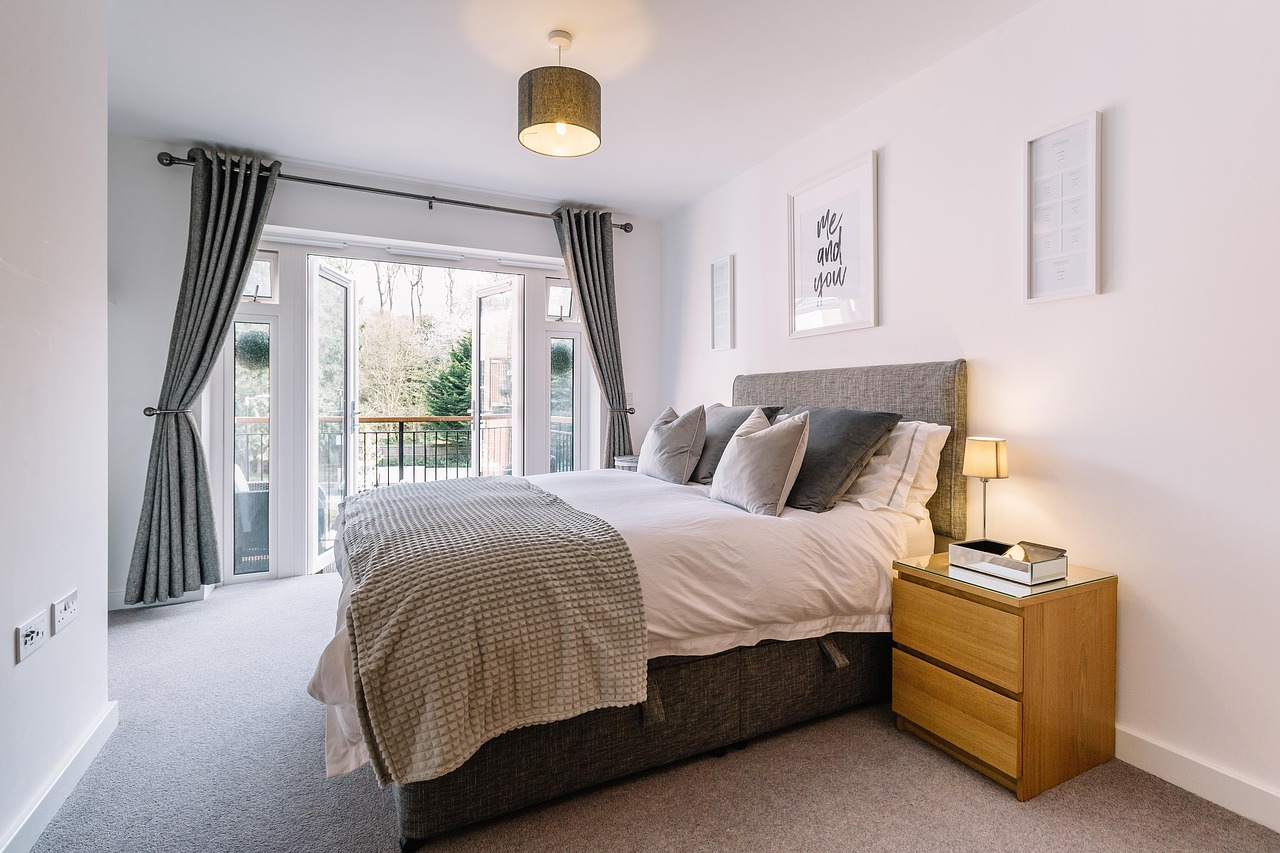
Across the U.S. housing market, buyers and renovators are making more practical decisions about how much space they need and how each room should function. That shift is showing up in a growing willingness to leave some rooms intentionally unfinished, lightly furnished or undefined until household needs become clearer.
Housing and design data show a move away from fixed-use rooms

The clearest verified signal comes from Zillow’s 2025 Zeitgeist report, released December 17, 2025, which said Americans’ home searches shifted “away from square footage and high-end features toward homes that support lifestyles,” with flexible spaces gaining momentum in searches. Zillow said the findings were drawn from millions of natural-language searches, and its trends expert Amanda Pendleton said buyers increasingly want homes that “can flex for family” rather than simply offer more space. That does not measure unfinished rooms directly, but it does document a broad change in how Americans are thinking about rooms: less as permanently assigned spaces and more as adaptable square footage.
Other housing research points in the same direction. In an April 3, 2024 update on its “What Home Buyers Really Want” research, the National Association of Home Builders said the new edition was based on a nationwide survey of recent and prospective buyers and focused on how post-pandemic priorities have changed. NAHB separately said in February 2024 that “better, not bigger” homes were among top design trends, tying smaller footprints to demand for practicality and efficiency. When homes are designed with less excess space, owners have stronger incentives to postpone expensive, room-by-room finishing decisions and preserve flexibility.
That trend has also been visible in new-home design reporting. Axios reported on August 23, 2025 that nearly 80% of designers working on new home communities said dining rooms became less important over the prior year, citing research shared by John Burns Research and Consulting and Pro Builder. According to that report, formal dining rooms are being replaced by flex rooms that can serve multiple roles, including an office or bedroom. In practical terms, a flex room often stays visually incomplete at first: fewer built-ins, less specialized furniture and no permanent identity until the household decides what the room needs to become.
The shift is national, but the impact looks different from house to house

This is not a trend limited to one state or one type of homeowner. Zillow described the move toward adaptable layouts as a national pattern in 2025 search behavior, and Houzz’s April 22, 2025 U.S. renovation study showed that renovation activity remained historically strong even with some moderation. Houzz said its annual findings were based on a survey of 21,889 users, including 10,981 renovating U.S. homeowners, and found that 54% undertook renovation projects in 2024 while another 54% took on decorating projects. That level of activity suggests many households are still investing in their homes, but not necessarily completing every room to a formal, magazine-ready endpoint.
What remains unconfirmed is exactly how many Americans are leaving “entire rooms” unfinished in a literal sense, because the major national datasets do not publish a room-by-room count for intentionally incomplete spaces. The available evidence instead shows adjacent behaviors: lower priority for formal dining rooms, stronger demand for multiuse layouts, and a market shift toward homes that can adapt over time. Those patterns help explain why a guest room may remain mostly empty, why a bonus room may hold only a desk and storage bins, or why a spare bedroom may stay blank until a child, parent or remote-work schedule requires it.
The local impact also depends on the housing stock. In older homes, homeowners may preserve a room without committing to a full remodel because they are pacing renovation budgets. In newer homes, builders may market a space as a loft, den, study or flex room rather than assign it a single use. Axios reported that dining rooms may still hold more value in some parts of the Southeast, citing designers in the John Burns and Pro Builder research, which indicates the move away from fully programmed rooms is not uniform in every market.
For residents, that means the unfinished room is often less a sign of neglect than a reflection of caution. The room may be structurally complete and fully livable, but intentionally left without specialized furniture, fixed storage or a permanent purpose.
Affordability, renovation costs and changing routines are driving the decision

The reasons behind the trend are more concrete than aesthetic. Axios linked the decline of dedicated dining rooms and other “nice-to-have” spaces to higher building costs, including labor and materials, along with still-high mortgage rates that are squeezing buyer budgets. The same report cited a February NAHB affordability analysis saying a median-priced new home at $459,826 was out of reach for roughly 75% of U.S. households. Under those conditions, households are more likely to prioritize the rooms they use daily and delay finishing spaces that may not have an immediate job.
Renovation economics reinforce that choice. Houzz reported in April 2025 that homeowners continued to fund most renovation work from savings, with 84% using savings for 2024 projects, while 29% used credit cards and 12% used secured home loans. Houzz also found that median spending rose for major remodels of small kitchens and small primary bathrooms. Those figures help explain why many households are focusing on kitchens, bathrooms and core infrastructure first, while leaving a spare room, formal sitting room or secondary bedroom for later. When a household has limited renovation dollars, the unfinished room becomes a budget strategy.
There is also a lifestyle component. Zillow said 2025 search behavior reflected a move toward homes that support “lifestyles” and “family needs,” rather than simply larger homes or more luxury features. That framing matters because family needs change faster than room categories used to. A room might need to become a nursery, then a playroom, then an office, then a bedroom for an aging parent. Leaving it unfinished or only partially furnished preserves optionality and avoids spending on a design that may not last.
For consumers, the practical takeaway is straightforward. An intentionally unfinished room increasingly reflects flexibility, affordability pressures and delayed commitment rather than an abandoned project. As builders shrink floor plans, renovators concentrate spending on high-use areas, and buyers continue searching for adaptable layouts, more American homes are likely to include at least one room that stays open-ended by design.