Across the U.S., home organizers, builders, and staging professionals have increasingly focused on high-function spaces that shape how a home feels day to day. In the entryway, that attention has narrowed to one recurring mistake: allowing the space by the front door to become an open storage zone for everyday items.
The common mistake is turning the entryway into a visible drop zone

The core problem identified by organizing and staging experts is not the existence of shoes, coats, keys, backpacks, or mail near the door. It is leaving those items fully visible and loosely stacked in the first space people see when they enter a home. Apartment Therapy, in a report built around interviews with professional stagers, said the entryway often becomes a dumping ground for jackets, hats, muddy shoes, mail, and other daily items, and multiple stagers described that buildup as a direct source of visual disorder. One designer quoted by the outlet said clutter at the entrance creates a “very chaotic feel,” underscoring how quickly a home’s tone is set at the threshold.
That pattern shows up especially clearly in smaller homes and apartments, where the entry may share space with a hallway, living room, or kitchen. Real Homes, citing professional organizers and interior designers, reported that small entryways become cluttered when they are asked to hold too many functions without enough defined storage. The publication said too much furniture, too many loose accessories, and too many exposed everyday items can make an entrance feel smaller, more overwhelming, and less organized. The practical issue is not only lack of square footage, but lack of boundaries for what stays in the entry and what gets moved elsewhere.
The same concern extends beyond décor. In a more recent Apartment Therapy report on homebuying and storage, an agent said missing or poorly planned entryway storage is foundational to daily chaos because shoes, coats, keys, and bags quickly migrate onto nearby surfaces. That assessment aligns with broader organizing advice from The Washington Post, which reported in January 2026 that professional organizers see a frequent household mistake in treating surfaces as temporary holding areas rather than making clear decisions about where belongings belong. Applied to an entryway, that means the mistake is less about owning too much and more about allowing the first visible surface near the door to absorb the overflow.
The impact is especially visible in apartments and small-space homes

For renters and condo owners, the effect of this mistake is often immediate because the front door opens directly into active living space. When there is no foyer, mudroom, or entry closet, shoes and outerwear are not hidden by architecture; they remain in sight from the sofa, dining table, or kitchen. Real Homes reported that in compact homes, even a small number of misplaced items can make the entrance look busier because there is less visual separation between storage and living areas. In those layouts, a pile of sneakers, reusable bags, and unopened mail may occupy only a few square feet, but it can dominate the room’s first impression.
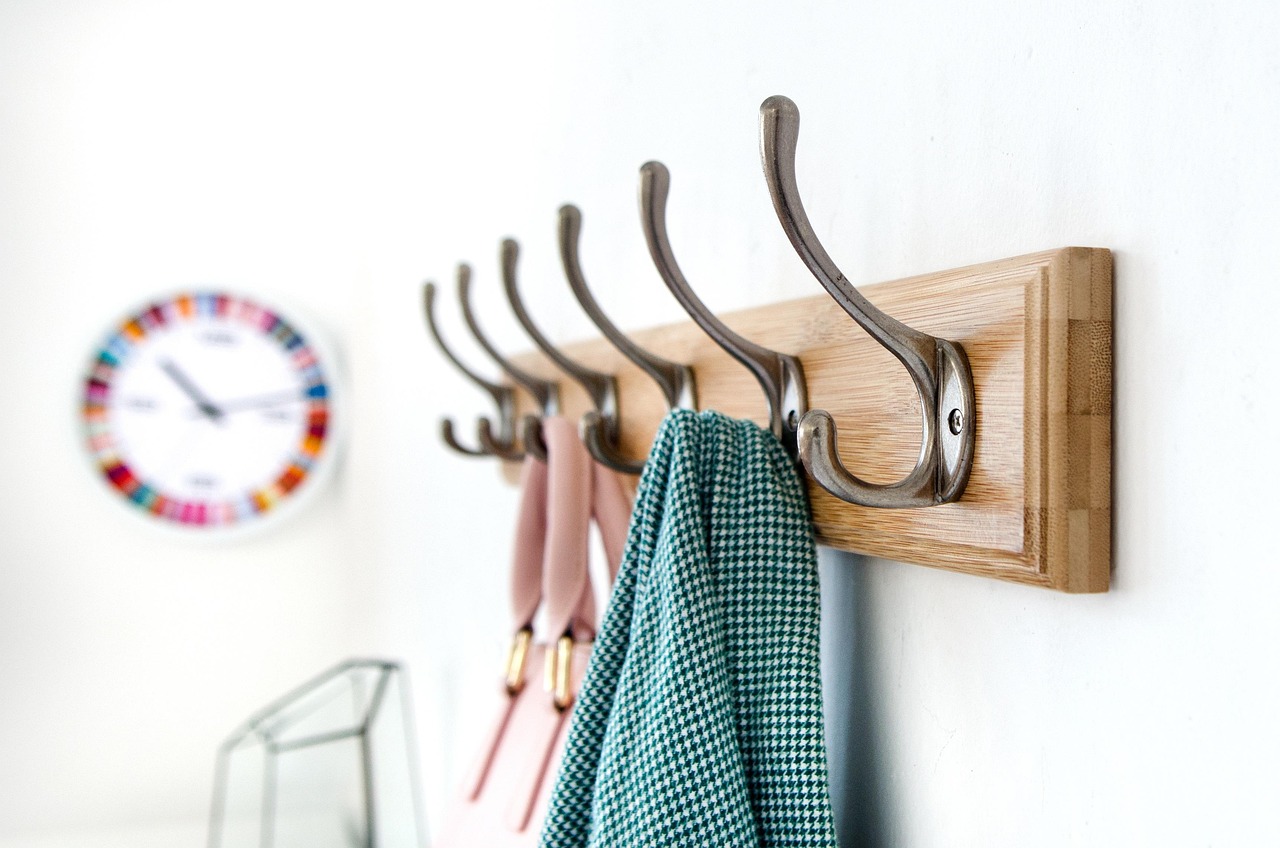
What is confirmed by the available reporting is that experts consistently recommend reducing what stays visible at the entrance and assigning a controlled storage function to the area. Apartment Therapy cited home stagers who recommended a defined drop zone, a shoe basket, and a place for keys instead of allowing items to spread across the floor and adjacent surfaces. Designers interviewed separately by the same outlet said that if the entry cannot support daily-item storage cleanly, those items should be assigned to another area of the home rather than remaining in the doorway. The advice is notable because it does not depend on large renovations; it depends on reducing exposed clutter and limiting how many categories of items are allowed to remain in view.
What remains less certain is how widely homeowners have adopted permanent entry storage upgrades. The National Association of Home Builders said in a May 1, 2024, release that remodeling activity remains broad-based, but that survey focused on popular remodeling jobs overall rather than publishing a comprehensive national count for entryway-specific overhauls such as mudrooms or built-in drop zones. In other words, industry groups have confirmed strong interest in remodeling and functional home improvements, but they have not released a definitive national inventory showing how many households have solved entry clutter through structural changes. For many residents, especially in older apartments, the issue remains one of organization rather than renovation.
Why the problem persists, and what it means for residents

The reason this mistake keeps resurfacing is straightforward: the entryway handles traffic, weather gear, packages, and routine transitions multiple times a day. Professional organizers interviewed by Real Homes said people tend to overload the area with products, furniture, and seasonal items in an effort to make it functional, but that strategy can backfire when the storage itself adds visual bulk. The Washington Post’s reporting on organizing errors pointed to a related cause in many homes: people postpone decisions, letting objects sit temporarily on a surface until temporary becomes permanent. In the entryway, that delay turns a bench, floor edge, or console table into a long-term holding area.
There is also a broader housing-design context. NAHB said in early 2024 that builders and remodelers were continuing to emphasize practical home features and resilient, better-performing spaces, reflecting a market that increasingly values function along with appearance. While the association’s published materials did not identify one single entryway solution as a national standard, the larger trend supports why storage planning keeps surfacing in design coverage: households want spaces that handle daily routines efficiently. Media reports from organizers and designers reflect that same shift, with repeated emphasis on slim shoe cabinets, hooks, baskets, and multifunction benches that reduce what remains in sight without requiring major square footage.
For residents, the practical takeaway is narrow and fact-based. The mistake that makes a home feel more chaotic is not having an entryway with activity; it is leaving that activity exposed in the form of visible piles. Experts cited across home-design coverage have consistently said the fix is to define the entry’s role, limit what remains there, and move overflow out of immediate view when the space cannot support open storage. The available reporting does not suggest one mandatory product or one universal layout, but it does point to a consistent principle: when the first few feet inside the door stop functioning as a catch-all, the rest of the home usually reads as more orderly as well.