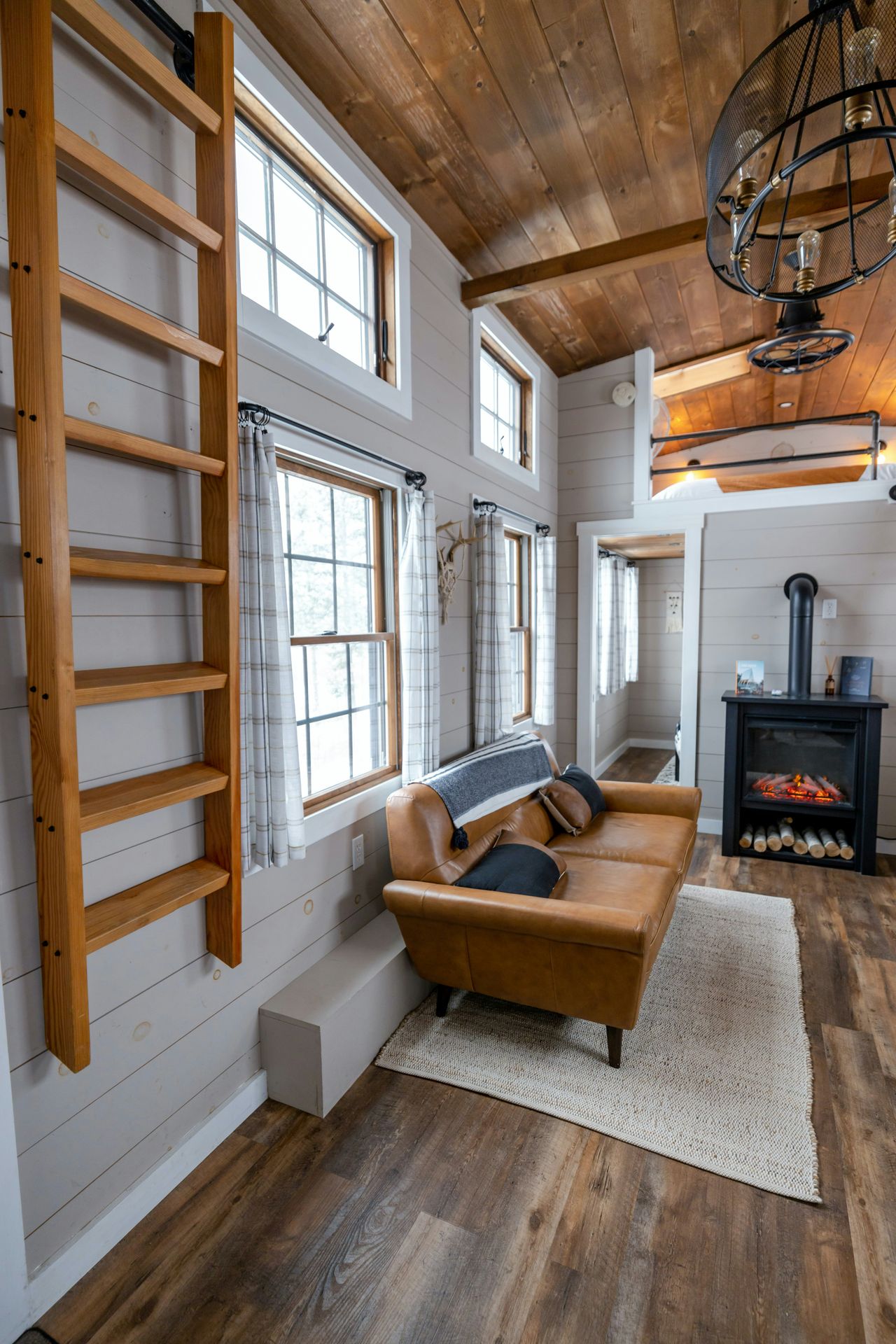
As housing costs keep pressuring buyers, builders and homeowners across the U.S. are putting more attention on smaller homes, accessory dwelling units and interiors that do more with less. In 2026, that trend is showing up not as a retreat from comfort, but as a design and housing strategy built around flexibility, storage and multiuse living.
Smaller homes are getting a measurable push from builders, researchers and code officials
The clearest signal came on February 26, 2025, when the National Association of Home Builders said buyers were continuing to shift toward smaller homes, with median new-home size falling from 2,200 square feet in 2023 to 2,150 square feet in 2024, the lowest level in 15 years, according to NAHB survey research. In the same release, the trade group said townhomes had grown to a record 17% of the single-family market, up from 10% in 2009, tying smaller footprints directly to affordability pressures in land, labor and materials. NAHB also said builders expected more transition and flex spaces in 2026, including multipurpose rooms and drop zones that expand how a smaller home functions without increasing its footprint. Those findings moved the small-home conversation beyond aesthetics and into market behavior.
That shift is also being reflected in remodeling data. Houzz said in its 2026 U.S. Houzz & Home Study, based on a survey of 20,358 users including 10,176 renovating U.S. homeowners, that renovation activity remained widespread, with 54% of homeowners reporting renovations and 52% reporting decorating activity. In a separate 2026 kitchen trends report, Houzz said 68% of renovated kitchens ended up about the same size after work was completed, even as owners rethought layouts to make those spaces function better. That detail matters because it shows the current small-space trend is not primarily about adding square footage; it is about reorganizing existing space to perform more jobs.
Code policy has also helped bring tiny homes and small detached units further into the mainstream, though the rules remain uneven by jurisdiction. NAHB notes that tiny homes gained a clearer code path beginning with the 2018 International Residential Code, while state-level adoptions and amendments continue to vary. Recent state code publications in places including Georgia, North Carolina and South Carolina show dedicated tiny-house appendices or amendments in current residential codes, confirming that some states are continuing to formalize standards for small dwellings rather than treating them as an informal niche. Freddie Mac, in a January 2025 fact sheet, also grouped ADUs with terms borrowers commonly use such as guest houses, casitas and tiny homes, underscoring how the housing finance and policy conversation increasingly overlaps with the tiny-home trend.
The local impact depends on state and city rules, and that remains uneven across the U.S.
For residents, the practical impact of the tiny-home trend is highly local. A buyer in one metro area may find smaller new homes, compact townhomes and low-rise multifamily options entering the market, while a homeowner in another city may be more affected by ADU rules or by remodeling choices that make an existing house feel larger without an addition. NAHB said low-rise multifamily segments showed relative strength entering 2026, especially in outlying metro and non-metro counties where those building types are more common. That matters for local readers because the smart-small-space trend is not limited to stand-alone tiny houses; it also includes townhomes, compact multifamily units and renovations that improve livability inside a fixed shell.
What remains unconfirmed in many places is a comprehensive count of where tiny homes are broadly permitted, where they are limited to ADU use, and where they still face zoning or certification barriers. Freddie Mac’s 2025 ADU fact sheet said financing is available for ADUs, but also stressed that units must meet local zoning and land-use requirements. California’s 2025 ADU handbook said state ADU law does not specifically define tiny homes, a reminder that the label often means different things in different legal contexts. In many municipalities, a tiny house on a permanent foundation is treated differently from a tiny house on wheels, and local rules may distinguish between primary residences, backyard units and movable structures. The result is that the company or government entity promoting small housing may confirm a broad policy direction without releasing a single nationwide list of all affected jurisdictions.
That patchwork has a direct effect on consumer choices. Some residents are using the trend to create rental or multigenerational space through ADUs, while others are applying the same design logic inside apartments and older single-family homes. Houzz’s 2026 outdoor study found that 83% of renovated outdoor spaces included a lounge or seating area, suggesting that small-home living increasingly extends usable space outdoors when lot conditions allow it. In practice, that means a compact home may feel larger because the footprint is supported by better storage, better room sequencing and more usable exterior square footage, not because the house itself is dramatically bigger.
The broader cause is affordability, aging housing stock and a design shift toward flexibility
The main driver behind the small-space trend is affordability, according to industry and housing sources. NAHB said in 2025 that smaller homes and more townhomes were gaining traction because material, lot and labor prices continued to rise. In a separate 2026 housing trends release, the association said first-time buyers had fallen to 21% of the market in 2025, down from 44% in 1981, and said builders were responding with incentives, price cuts and home designs that made better use of available space. That is a direct explanation for why “smarter, not smaller” has become a useful way to describe the current moment: the market is trying to preserve function while controlling cost.
A second cause is the age and configuration of the housing stock already in place. NAHB said the typical age of a U.S. home rose from 31 years in 2006 to 41 years in 2023, helping drive remodeling activity as owners adapt older homes instead of moving. Houzz’s renovation findings support that pattern, showing that many households are investing in layout changes and functionality rather than expansion alone. IKEA U.S., in its 2026 style guide, said it was tailoring ideas for homes “whether big or small,” while product and design reports across the sector continue to emphasize modular storage, foldaway surfaces and multifunctional rooms. The trend line is consistent even when the sources come from different parts of the housing market.
For residents and customers, the near-term meaning is practical. Smaller homes are likely to remain part of the housing conversation in 2026, but the lived experience of that trend will depend on local zoning, financing options, lot size and whether a homeowner is building, buying or renovating. What is confirmed is that builders are still designing for flex use, remodelers are improving function without always enlarging rooms, and code systems in some states are continuing to recognize tiny-house formats. What is not yet uniform is the legal treatment of every tiny-home type in every city. For now, the broader housing industry context points to one stable fact: compact living is increasingly being shaped as a planning and design response to cost pressures, not as a temporary novelty.