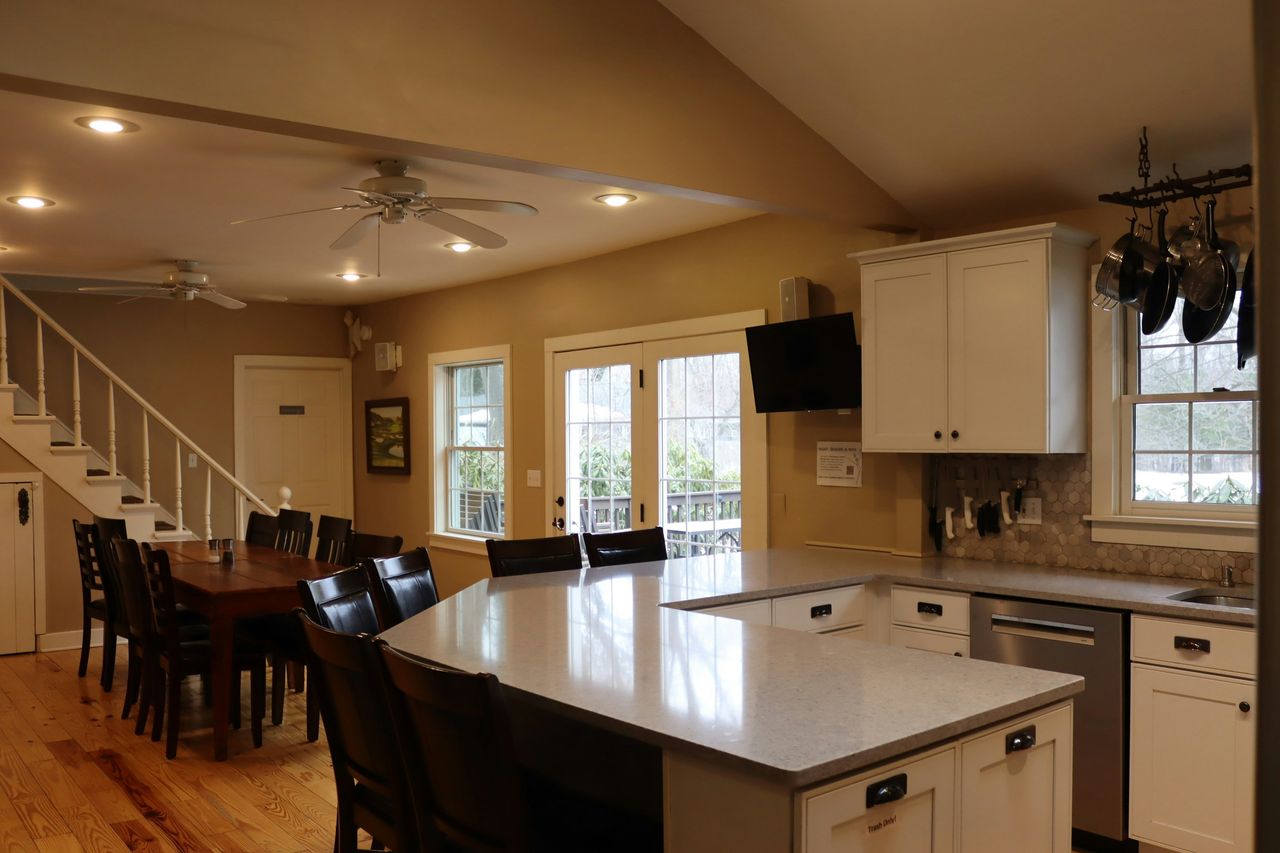
Across the U.S. housing market, home layouts are being reshaped by affordability pressures, remote and hybrid work, and a stronger focus on rooms that serve more than one purpose. The latest evidence points to one of the clearest changes yet: the traditional dining room is being edged out by flex space that fits how many households actually live now.
Designers and housing researchers say the dining room is losing space to flex rooms

The clearest recent marker came on August 23, 2025, when Axios reported new research from residential designers working on new home communities showing that nearly 80% said dining rooms had become less important over the prior year. Axios said those rooms are increasingly being replaced by flex rooms that can function as a home office, bedroom or other multiuse area, citing design research shared with the outlet. That finding gave a hard number to a change architects, agents and remodelers had been describing for several years.
Other recent housing and design reports support the same direction, even when they stop short of declaring the dining room gone. Realtor.com’s 2025 home-trend research said dedicated dining rooms are less likely to be highlighted in listing language as open-concept layouts become standard, while Zillow Research found that the importance of an extra room for a home office rose to 51% among prospective buyers in 2025, up from 47% a year earlier. Redfin added another sign of the shift in an April 2026 release, saying Gen Z buyers want at least one designated office and may use other rooms as guest space or flex space.
Renovation data also shows where square footage is being reassigned. In the 2025 U.S. Houzz Kitchen Trends Study, Houzz reported that 29% of kitchen expansions tapped dining-room space, making it one of the most common areas absorbed when homeowners enlarge kitchens. Houzz’s broader 2025 and 2026 design coverage has also emphasized integrated layouts, hidden storage and rooms that do more than one job, including offices tucked into mixed-use zones. Taken together, the pattern is not simply that Americans have stopped eating together; it is that the stand-alone formal room is facing direct competition from spaces that can work every day, not just when guests arrive.
The shift is national, but it is especially visible in apartments and smaller homes

The trend is not confined to one state, and no single national builder has released a comprehensive state-by-state list of communities where dining rooms have been removed from floor plans. What is confirmed is broader: designers, listing analysts and remodelers are all documenting less emphasis on dedicated dining rooms and more emphasis on adaptable space. In practical terms, that often means a larger kitchen island, an eat-in kitchen, or a room labeled as a study, office, den or flex room instead of dining.
Apartments have become one of the clearest examples of the shift. The Atlantic reported in June 2024 that many new apartments no longer include an obvious place for a dining table, with eating often centered on islands, living rooms or bedrooms instead. The publication tied that pattern to shrinking household size and the trade-offs developers make when trying to maximize bedrooms, closets and private space within tighter footprints. That framing matters because the disappearance of the dining room in apartments is not always a design preference alone; it can also be a space-allocation decision driven by rents, construction costs and unit economics.
The same trade-offs show up in for-sale housing. According to Axios’s 2025 report, designers said home plans are shrinking as builders try to preserve function while costs for labor and materials remain elevated and mortgage rates continue to pressure budgets. In that environment, a formal dining room can be one of the first spaces reconsidered because kitchens, storage and flexible secondary rooms often rank higher in daily use. Some regional variation still exists: Axios reported that buyers in parts of the Southeast continue to value formal dining when it fits the plan. But the national direction is toward rooms that can change with work schedules, family size and entertaining habits, rather than a dedicated room with a single purpose.
Costs, work habits and everyday use are driving the change for homeowners and renters

The reasons behind the shift are unusually consistent across sources. Affordability is one of the biggest. Axios reported that higher building costs and still-high mortgage rates are forcing designers to fit the same amount of function into smaller homes. Realtor.com also tied broader home-design changes to open-concept planning and changing buyer priorities, with practical features getting more attention in listings than formal entertaining space. When square footage becomes more expensive, rooms used occasionally face more pressure than rooms used daily.
Work patterns are another major factor. Zillow’s 2025 consumer housing trends report found a renewed rise in demand for extra home-office space among buyers, and Redfin said younger buyers in particular are looking for at least one designated office with additional rooms that can flex for guests or other uses. That helps explain why the replacement for the dining room is often not another entertaining room but a hybrid space with a desk, storage, sleeper sofa or doors that allow privacy. Houzz’s coverage of popular 2025 home offices similarly shows offices being integrated into multipurpose areas rather than always carved out as fully separate rooms.
For residents, the practical meaning is straightforward. In many new homes and apartments, the place to eat is increasingly the kitchen island, breakfast area or an open living-dining zone rather than a closed or formal dining room. Buyers and renters should also expect room labels to be more fluid, because a “flex room,” “study” or “bonus room” may be doing the job that a dining room once did in older floor plans while also serving work, storage or guest needs. The dining room has not disappeared entirely, and Houzz and other design publications still show strong interest in dining spaces for entertaining, but current housing data indicates that flexibility now carries more value in many floor plans than tradition alone.