U.S. homeowners are still pouring money into remodeling even as housing economists and real estate agents warn that resale value depends less on personal taste and more on what buyers broadly want. New 2025 and 2026 reports show that several high-cost projects Americans regularly choose deliver far less value at resale than their price tags suggest.
National remodeling data show some of the biggest-ticket projects have the weakest payback

The clearest recent benchmark came on April 9, 2025, when the National Association of Realtors and the National Association of the Remodeling Industry released the 2025 Remodeling Impact Report, and when the Journal of Light Construction’s 2025 Cost vs. Value data continued to show a sharp divide between projects homeowners enjoy and projects that actually pay off at sale. NAR said homeowners reported top “Joy Scores” for adding a primary bedroom suite, a kitchen upgrade and new roofing, while its cost-recovery analysis found the best resale performance came from more basic projects such as a new steel front door, which recovered 100% of cost in that report.
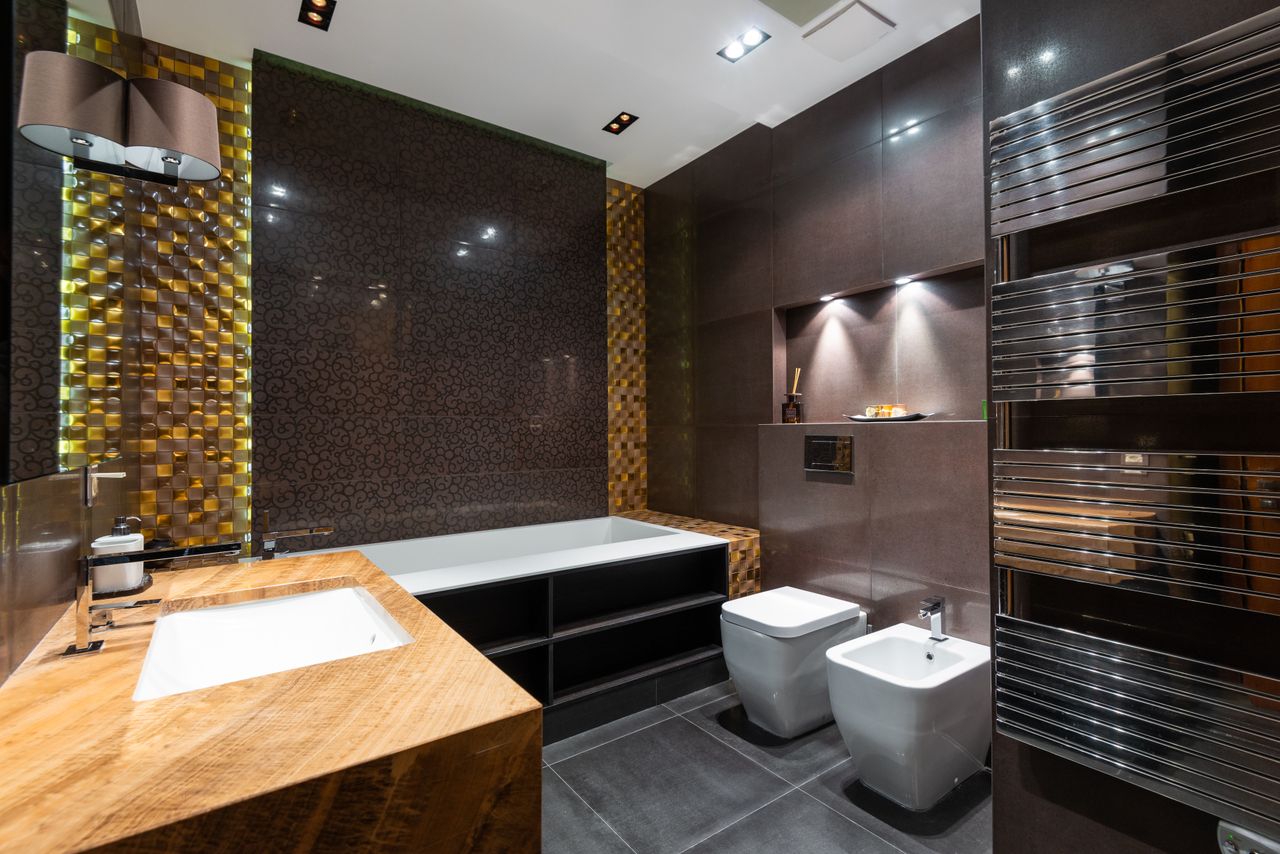
The Journal of Light Construction’s national averages were even more striking. Its 2025 Cost vs. Value Report put garage door replacement at a 268% cost recoup, entry door replacement with steel at 216%, and manufactured stone veneer at 208%. By contrast, many of the projects that consume the largest budgets landed near the bottom of the list: an upscale primary suite addition cost an average $351,613 and recouped 18%; solar power installation cost $55,937 and recouped 30%; an upscale major kitchen remodel cost $164,104 and recouped 36%; an upscale bathroom addition cost $111,255 and recouped 36%; and an upscale bathroom remodel cost $81,612 and recouped 42%.
That mismatch between owner satisfaction and resale value is a recurring theme in the latest reports. NAR Deputy Chief Economist Jessica Lautz said in the group’s 2025 release that what remains notable is the gap between the happiness people feel after remodeling and the amount of project cost they actually recover. The data suggest that expensive, highly customized interiors can make sense for households planning to stay put, but they often do not translate into a comparable jump in market value when the home is listed.
Zonda, the parent company behind Cost vs. Value, said in its 2025 trend analysis that exterior renovations have outperformed discretionary interior remodels for two decades. The firm said eight of the 10 highest-return projects in 2025 were exterior replacements, and it linked that pattern both to lower labor complexity and to the strong resale importance of curb appeal. In practical terms, the more complicated and personalized the project becomes, the less likely it is to return its full cost at closing.
The spending is national, but the local payoff depends on what buyers in a market actually need

What this means in any given city or suburb is more complicated than a single national ranking. Zillow reported in 2025 that 72% of sellers took on at least one home improvement project to prepare their home for sale, showing how common pre-listing renovation has become. But the company also said not all projects are equal, and several upgrades that homeowners treat as investments can narrow the buyer pool instead of broadening it.
Zillow’s March 30, 2026 analysis identified several projects that often fail to lift value in a meaningful way. The company said converting a garage into a bedroom can hurt resale competitiveness because garages still carry a 0.9% sales premium in its research, especially in places where off-street parking matters. It also said installing laminate countertops is associated with homes selling for 2.5% less than comparable listings, while converting a bedroom into a closet can reduce appeal because buyers often search first by bedroom count.
Pools are one of the clearest examples of how local conditions shape value. Zillow said an in-ground pool can be a “significant financial gamble” outside luxury neighborhoods where pools are common, citing installation costs of up to $67,000 plus roughly $6,000 for fencing from Thumbtack data. The company said some buyers see a pool as a maintenance burden or safety concern, though it also noted that saltwater pools can add about 2% to sale price compared with chlorine pools. That means the value case for a pool in Phoenix, South Florida or parts of Southern California may differ sharply from the equation in cooler regions or markets where buyers prioritize yard space and lower upkeep.
The same regional logic applies to backup generators, kitchens and bathrooms. Zonda said the generator category was one of the few interior-adjacent exceptions to the exterior trend, performing especially well in hurricane-prone southern states and in New England, but much worse in West North Central markets. Zillow also said even kitchen remodels should be matched to local expectations, noting that buyers care about kitchens, but not every market rewards a full overhaul. No national report provides a comprehensive, address-by-address list of which neighborhoods can support a luxury renovation premium, so sellers still need market-specific pricing guidance before assuming a costly project will be reflected in an asking price.
Experts say inflation, customization and buyer preferences are driving the low-return pattern

The main reason these projects underperform is not that buyers dislike improvements. It is that the highest-cost remodels are often the most customized, the most labor-intensive and the hardest to value consistently across markets. Zonda said in its 2025 analysis that complex projects such as full kitchens, bathrooms and additions tend to post lower resale returns because they cost far more to build and because one owner’s choices in cabinets, counters, hardware and layout may not appeal to a broad range of future buyers.
That helps explain why a modest kitchen refresh fares better than a luxury gut renovation. In JLC’s 2025 data, a minor midrange kitchen remodel cost $28,458 and recouped 113%, while a major midrange kitchen remodel cost $82,793 and recouped 51%, and a major upscale kitchen remodel cost $164,104 and recouped only 36%. Zillow echoed that distinction in its kitchen analysis, saying many buyers want a kitchen they can live with, not necessarily a seller-financed dream kitchen loaded with premium finishes. The company also said that if there is nothing functionally wrong with the kitchen, selling without remodeling may sometimes make more financial sense.
Bathrooms show the same pattern. Zillow said midrange bathroom remodels still perform better than upscale or accessibility-focused versions in resale terms, while the 2025 JLC data put a midrange bathroom remodel at 80% cost recoup and an upscale bathroom remodel at 42%. Bathroom additions ranked lower still. The reports do not argue that these projects are mistakes for every owner; they show that spending more does not automatically produce proportionally higher market value.
For homeowners and would-be sellers, the practical takeaway is narrower than many renovation marketing pitches suggest. Projects that improve daily life may still be worth doing, and NAR’s 2025 report made clear that owner satisfaction remains high for major upgrades such as primary suites and kitchen improvements. But the latest data indicate that Americans spending tens of thousands, and in some cases more than $300,000, on highly personal additions should not assume those costs will come back in resale price. The broader 2025 and 2026 industry consensus is that simpler, more universal improvements still tend to travel best from one owner to the next.