Design advice coverage has increasingly shifted from trend-driven shopping lists to the fundamentals that shape how a home feels the moment someone enters it. In interviews published across shelter magazines and lifestyle outlets, interior designers said the first things they notice in someone’s home are usually not decorative accents at all, but the underlying conditions that affect comfort, movement and atmosphere.
Designers say function registers before styling

Recent designer interviews point to a consistent theme: professionals tend to assess how a room works before they focus on what is sitting on shelves or hanging on walls. In a recent House Beautiful feature, designer Nate Berkus said that when he walks into a home, he instinctively evaluates the furniture arrangement and mentally considers how the layout could be improved. That response puts function ahead of ornament and suggests that circulation, balance and usability are often the first filters through which a designer reads a space.
That view is echoed in broader expert roundups from Homes & Gardens, where designers described lighting, furniture placement and the room’s focal point as the details they notice first. Paul Cuschieri of Rebirth Design Studio told the publication that lighting is one of the earliest signals of whether a space feels considered, while other designers interviewed there said they immediately register what is not working in a room’s composition or function. In practice, that means a home can contain attractive decor and still feel unresolved if the room is dim, the seating is awkwardly arranged or the proportions are off.
House Beautiful reported similar observations in a recent piece on decorating mistakes designers notice right away. Among the issues cited were rugs that are improperly sized, furniture groupings that do not feel grounded and inconsistent light bulb temperatures that disrupt the mood of a room. Those details are technical rather than decorative, but they shape first impressions quickly because they affect how cohesive a space feels before a guest has time to inspect individual objects.
Taken together, those published comments show that “the first thing” is not always one single item. Instead, designers often mean the first underlying condition that reveals whether a room functions well. Layout, light quality, proportion and ease of movement can all register within seconds, and those elements tend to matter more to professionals than a vase, throw pillow or wall accessory.
The impact shows up in ordinary homes, not just designer projects
What makes the advice notable is that it applies as much to everyday apartments and single-family homes as it does to professionally designed interiors. Many of the issues designers flag first are inexpensive or structural choices that ordinary residents control, including lamp placement, bulb consistency, clutter management and furniture spacing. That helps explain why the takeaway has gained traction in mainstream lifestyle coverage rather than remaining limited to trade publications.
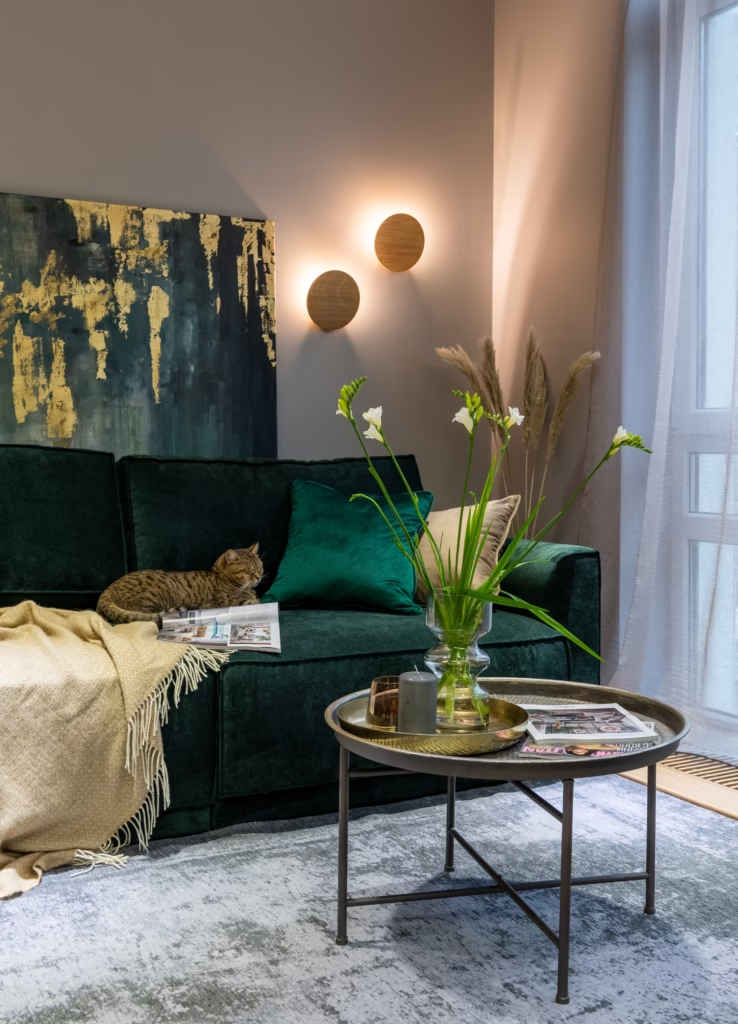
Homes & Gardens has repeatedly framed the issue around how a space feels upon entry, not how expensive it looks. In one feature, designers said a room should have a clear focal point and a sense of proportion, whether that comes from art, a seating area or another anchored feature. In another article, the publication noted that one-dimensional overhead lighting is a common reason a home does not feel finished. That assessment reinforces the idea that atmosphere is built through layering and planning, not simply through buying more decor.
House Beautiful has also emphasized that first impressions often come from editing mistakes rather than taste itself. Its recent coverage highlighted practical missteps such as scale problems, overly small rugs and mismatched lighting temperatures. Those are common in rental units, starter homes and recently furnished spaces because people often acquire pieces gradually or work around difficult floor plans. Designers are not necessarily judging personal style first; they are noticing whether the room supports daily use and visual coherence.
What remains less clear is whether any one factor always ranks above the others. Published designer commentary does not establish a single universal answer, and the outlets that surveyed professionals presented a range of responses. Some emphasized layout first, others lighting, and others the broader feeling created by scent, calm or visual order. The shared conclusion is narrower and more verifiable: decor is often not the first thing that registers, because professionals typically read a room through function and atmosphere before they evaluate decorative choices.
Why this matters for residents and what people can reasonably take from it
The broader context is that home coverage has moved toward “livability” as a measure of good design. That shift reflects both economic reality and changing expectations. In a market where many households are staying longer in existing homes, renting smaller spaces or furnishing rooms in stages, advice centered on layout and lighting is more actionable than advice centered on buying a new set of accessories. The reporting from House Beautiful and Homes & Gardens fits that pattern by focusing on what creates comfort and clarity at entry.
There is also a practical reason designers notice these elements first: they are the fastest indicators of how a household uses its space. A cluttered entry, harsh overhead light, blocked pathway or disconnected seating arrangement can communicate more immediately than decor because those conditions affect the body before they affect aesthetic judgment. A room that is easy to move through, evenly lit and visually anchored tends to feel settled on arrival, even if its decorative scheme is modest.
For residents, the implication is not that decor is irrelevant. The reporting suggests the opposite: decorative choices tend to work better when the room’s fundamentals are already in place. Art, textiles and collected objects can strengthen a space once scale, lighting and arrangement support them. Without that foundation, even expensive decor may not change the first impression very much.
The most grounded takeaway is that first impressions are usually built from systems, not statement pieces. Designers quoted in recent coverage consistently pointed to lighting quality, furniture placement, proportion and overall atmosphere as the elements they assess first. For readers trying to understand why a room feels off, that offers a factual place to start: before changing the decor, look at how the home functions the moment someone walks through the door.